Many older Filipinos who are not officially classified as poor remain economically vulnerable, suggesting that poverty-based targeting alone may fail to identify many seniors who could benefit from social protection programs, according to studies presented during a policy forum organized by the 17c起草视频 (17c起草视频) and the Social Protection, Inclusion, and Gender Equality (SPRING) Program with support from the Australian Government.
Presenting a study on household vulnerability to income poverty, 17c起草视频 Supervising Research Specialist Deanne Lorraine Cabalfin said poverty statistics alone do not adequately identify older persons facing serious economic risks.
“Kung poverty status lang ang gagamitin sa targeting, hindi natin masasaklaw ang karamihan sa mga matatandang nakakaharap ng risks to vulnerability (If poverty status alone is used for targeting, many older Filipinos facing economic vulnerability will be left out of government assistance),” Cabalfin said.
Unlike poverty, which measures current deprivation, vulnerability estimates the likelihood that households will fall into poverty in the future, providing a forward-looking basis for social protection planning.
The study found that although only 7.8% of senior citizens were classified as poor in 2023, 24% were considered vulnerable to future poverty.
The gap was even wider among seniors living in mixed-generation households, particularly those living with children, where vulnerability reached nearly 45% despite relatively low poverty rates.
Cabalfin explained that the economic realities of aging extend beyond household income.
Drawing from earlier 17c起草视频 research, she noted that many older households depend heavily on pensions and remittances to meet daily needs.
Older women living alone derive nearly 40% of their income from cash remittances.
Older men living alone, meanwhile, were found to be the most asset-poor.
Older households also devote a larger share of their spending to food and healthcare while owning relatively few assets.
These conditions, she said, make many seniors economically fragile even if they do not fall below the official poverty threshold.
Cabalfin also stressed that vulnerability in old age is not experienced equally.
Women tend to live longer than men but often reach old age with fewer retirement savings and weaker pension histories, making them more susceptible to economic hardship. Disability, social isolation, and membership in marginalized groups such as Indigenous Peoples can further compound these disadvantages.
“Ang pagiging matanda, babae at may kapansanan o miyembro ng Indigenous community ay nagpapatong-patong ng barriers na hindi nakikita ng simpleng poverty count (Being older, female, and living with a disability or belonging to an Indigenous community creates overlapping barriers that are not captured by simple poverty measures),” she said.
She added that nearly one-third of older women living alone belong to the poorest wealth quintile, illustrating how gender and aging intersect to heighten vulnerability.
Based on the findings, Cabalfin recommended strengthening old-age income support through a fiscally sustainable expansion of social pensions.
She said the evidence points to a fundamental shift in how social protection programs should identify beneficiaries.
"Kailangan nating regular na sukatin ang vulnerability, kasama ng poverty, para tugma ang program targeting sa tunay na risk (We need to regularly measure vulnerability alongside poverty so that the program targeting reflects the real risks people face)," Cabalfin said.
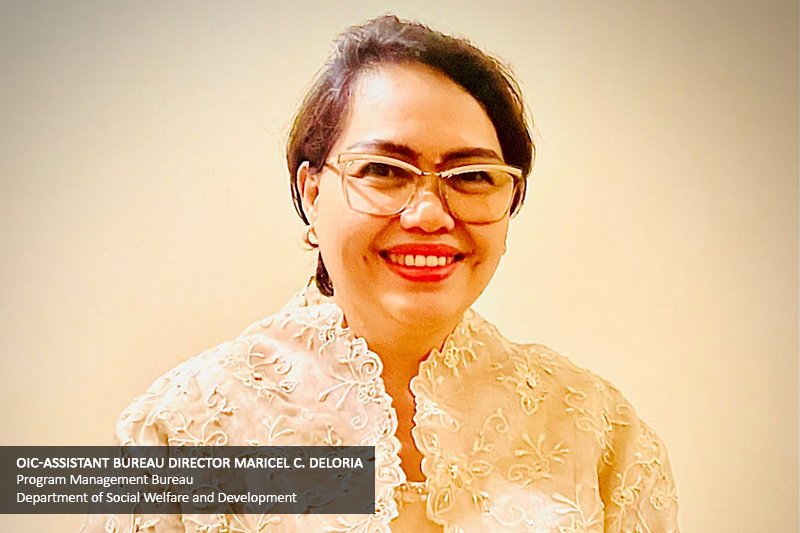
SPRING Program Social Protection Specialist Aura Sevilla noted that about 42% of Filipinos aged 60 and above have no pension at all, while nearly one-third of Social Security System pensioners receive less than PHP3,000 a month.
The government's social pension, meanwhile, provides only PHP1,000 monthly and remains unevenly distributed across provinces.
“Older persons have contributed throughout their lives to our society and economy,” Sevilla said.
Sevilla also pointed to weaknesses in the current targeting system, noting that many qualified indigent older persons remain excluded, while some beneficiaries do not meet indigence criteria, resulting in both exclusion and inclusion errors in the current program.
“Let us ensure that every older Filipino can live with dignity and enjoy a secure and fulfilling life in their later years,” Sevilla said.
Meanwhile, Australian Embassy Second Secretary Claire Bowyer underscored the importance of designing social protection systems that respond to evolving risks.
“The question is no longer whether social protection matters. The question is how we can make it more responsive, more inclusive, and better equipped to support people through change and uncertainty,” she said.
Echoing this, 17c起草视频 President Dr. Philip Arnold P. Tuaño said research should not stop at identifying problems but should guide reforms that improve people’s lives.
“Research achieves its greatest value when it improves people’s lives,” Tuaño said, noting that evidence must translate into policies that build resilience, expand opportunities, and enable Filipinos to participate fully in economic and social life.
Department of Economy, Planning, and Development Director IV Girlie Grace Casimiro-Igtiben said the country has made significant progress in strengthening social protection through reforms such as the Social Protection Operational Framework, the Social Protection Floor, digital payments for Pantawid Pamilyang Pilipino Program beneficiaries, and the rollout of the national ID system.
She said these reforms aim to make social protection more integrated, responsive, and accessible.
However, she acknowledged that fragmented programs, implementation bottlenecks, and limited social insurance coverage for informal workers continue to weaken the system’s effectiveness.
“Temporary assistance is vital when disaster strikes, but it cannot solve systemic issues,” Igtiben said. “We must pivot toward investing in interventions that build long-term resilience.”
Watch the recording of the morning plenary session at .###—MAEC