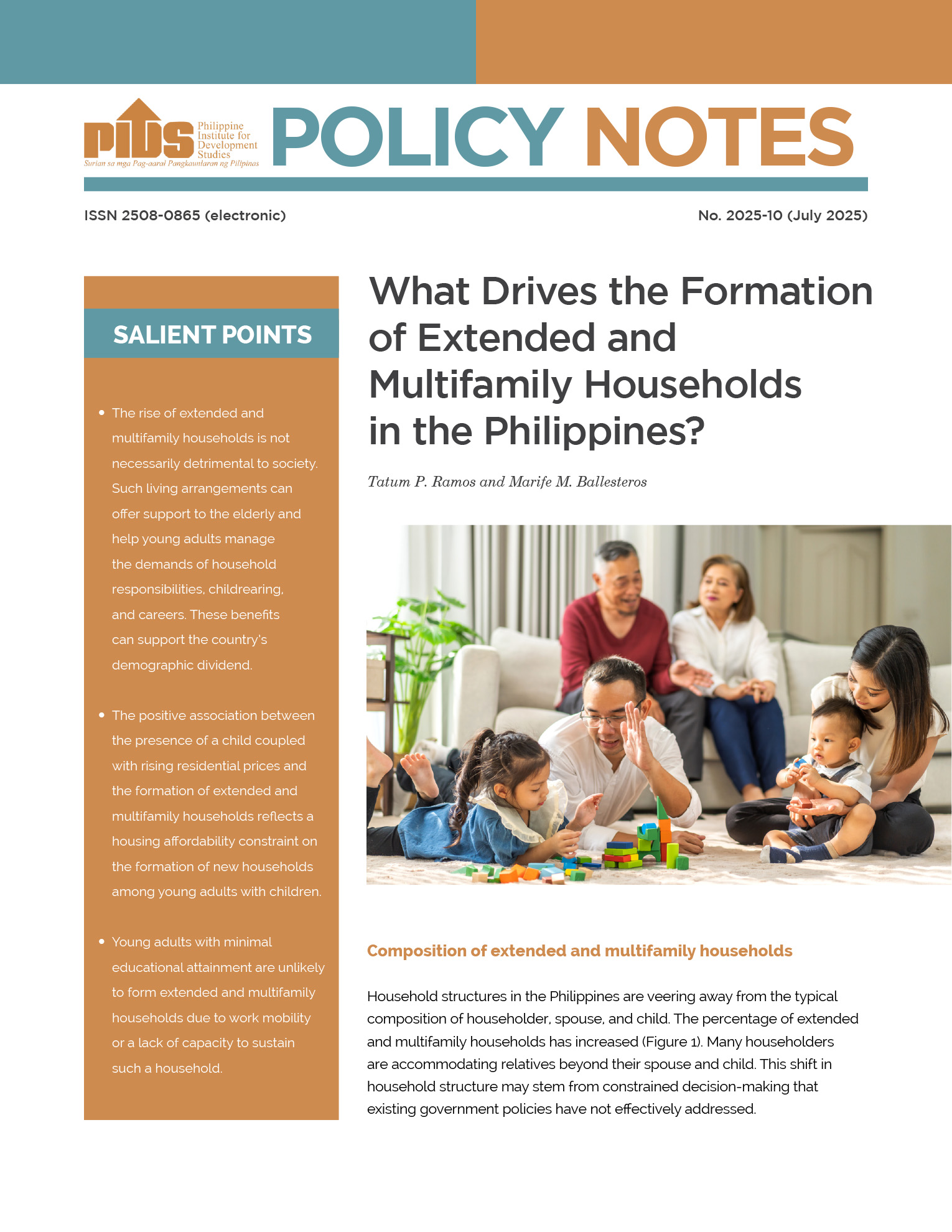
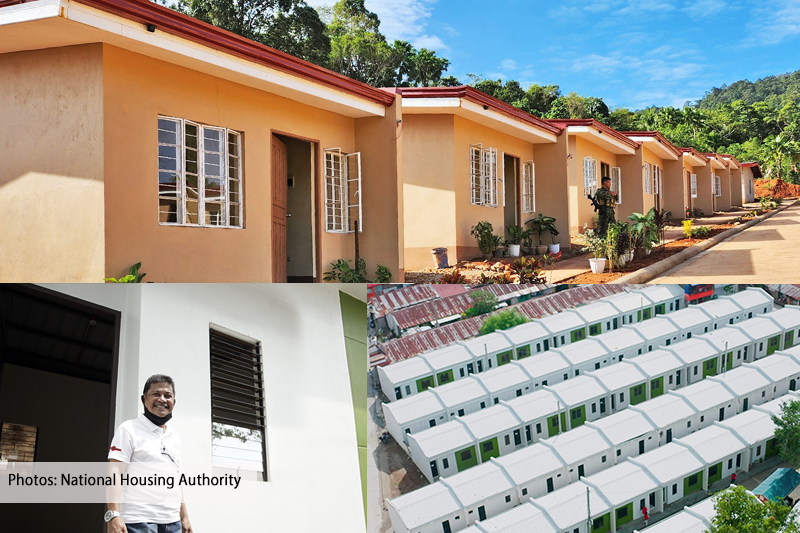
Despite the dominance of nuclear households in the Philippines, the share of extended and multifamily households is growing. This phenomenon reflects the constrained decision-making of individuals who prefer to form their own households but continue to live with additional relatives. This study examines the factors influencing young adults’ decisions to live in this type of household using multinomial logistic and fixed effects regression models. The results show that this formation is not necessarily a negative development. It offers opportunities for resource and cost sharing as the Philippines shifts toward an aging society. It also provides support to various groups, including the elderly, young families with children, and young adults working far from home. The results further indicate that housing unaffordability among young adults living with their children contributes to the formation of extended and multifamily households. Therefore, stronger efforts are needed to address housing market challenges, such as rising housing costs and limited affordable housing supply, particularly in urban areas.